Welcome to the News section of the iNSiGHT Ornithology website (https://www.simoncherriman.com.au/). This blog contains updates about various things I've been up to, interesting environmental issues and observations I make regularly while going about my day. It is designed to be fun AND educational, and inspire you about our wonderful natural world. Happy reading!

Tuesday, 4 February 2014

A Special Spot for a Special Species


It was only a year ago when I scaled a Karri tree on my friend's property in the Porongurup Range and hoisted into position an artificial nest box, designed to replicate a vertically oriented tree hollow. This is the favoured nest site for three charismatic birds of south-west WA: the Black Cockatoos. In 2008 we recorded a pair of one of these birds, the Carnaby's Cockatoo, nesting in a natural tree hollow, so to increase the number of nest sites, we put up a nest box. The box became occupied the following season, doubling the number of nesting pairs. Last year we put up the second box and today I installed the third, bringing the number of potential cockatoo nest sites available to four.

Here's what I found when I arrived at the block yesterday and checked the box that was installed a year ago . . . . .


What's in the Box? from Simon Cherriman on Vimeo.

Wednesday, 22 January 2014

Whose Nest is This?


Can you see the nest? WHAT NEST!?? I hear you say! This just looks like a picture of a pile of dead leaves! You are dead right, it does. So let's take a look at another photo, which has been enhanced to emphasise the shadows. Now, can you see the mound shape in the bottom left hand corner of this photo? I've even added a 77mm lens cap so you can get a feel for the size.


So what is it? When you read the word 'nest' you immediately think this must belong to a bird of some kind. But many mammals build nests too. Rats, mice, rabbits. But this nest was made by none of these introduced placentals. It was made by one of our unique marsupials, a local native digger from the Perth region, found throughout south-west WA.


Zooming in a bit closer, we can see the scale of this nest a bit better. It's about the size of a basketball, but more dome-shaped than spherical, and the actual nest chamber is dug below the surface of the ground, deep inside. The outer 'shell' is made from fairly coarse leaves, twigs and soil, mounded up to about 15cm. Where my finger is pointing is the entrance, and on the opposite side is the 'exit' (shown by the blue arrow), an emergency escape in case a predator comes in the front. This seemingly tiny hole must be made by a tiny animal, right? Not really. It's much bigger than my fist.

Ok, have you guessed who yet!? It's the nest of a QUENDA, or Southern Brown Bandicoot (Isoodon obesulus). The photo at the top of the page shows where I had an old boat stored upside-down in my parents' backyard, and when I moved the boat recently, I found it had provided a very useful hiding place for a Quenda to build its nest. There were in fact two nests there, an older one and a newer one. This is something that is very rare to find, as these clever marsupials usually hide their nests very well in thick vegetation. In native bushland you would really struggle to find one as they blend in even better. As far as I am aware, it is the female who makes this as a safe place to leave her young when they get too large for the pouch, although I have found a nest in which a single and quite large juvenile was sleeping, indicating all Quenda may make nests.

Whichever the case, bandicoots don't live in the same nest permanently - I've found several which I've known to be active for some weeks and then these become abandoned and the owner builds another one. I made sure this nest was well and truly vacated before dismantling it carefully to take this series of pictures.


You can see here what the inside of the nest chamber looks like - it has a much thicker lining of larger leaves and there are also finer grasses in there. The nest chamber is about the size of a large grapefruit. You can see the perfectly rounded shape which would be an ideal place in which a cozy Quenda can curl up, sleeping safe from predators during the daytime.

Next time you are gardening, keep an eye out under that thicket of shrubs or beneath some old tin in your backyard, and you might get to see a Quenda nest yourself.

Friday, 17 January 2014

Out of the Ashes


The Parkerville/Stoneville bushfires have been devastating for the local community - houses lost, lives changed forever. But the positive outcome has been the amazing way everyone has come together to help out, a true example of what humanity is about. Today I helped dismantle the twisted metal and rubble that was once a family's home, to give them a 'clean slate' to start rebuilding again. The owner kindly donated me these boxes of screws and nails, burnt in his shed. Although they look like rubbish these fasteners will be used for the construction of nest boxes - keeping our Re-Cyc-Ology theme alive. No matter what happens we can all reuse material which may at first glance seem like waste. It is this mentality which helps us recover from shocking disasters like the recent fires - and, as this Zamia is now doing, start on a journey of new growth.


Monday, 6 January 2014

The Last Sanctuary documentary: Australian Geographic


The first Australian Geographic magazine of 2014 was released today! This is exciting because special subscription editions of this issue contain a documentary co-produced by iNSiGHT Films, with wildlife footage I shot during visits to the Kimberely region in 2011 and 2012. "The Last Sanctuary" is a documentary about the efforts of a team of scientists, together with a range of volunteers, to understand the impacts of Cane Toads as they spread into Western Australia's Kimberley region. This film will hopefully air on Channel 9 very soon this year. Contact Australian Geographic and get your copy today!

Tuesday, 3 December 2013

Home of the Hawks


Don't those eyes just GRAB you!!?? Their owner tried to grab me a couple of times as I climbed to check her nest in the West Australian wheatbelt region today. These mesmerising yellow orbs belong to a gorgeous female Brown Goshawk (Accipiter fasciatus), one of the most formidable predators of the Australian bush. The species name 'fasciatus' means 'banded', after the horizontal bars (called 'chevrons') visible across the bird's breast. It was a great privilege to be shown a nest by a friend of mine and have the opportunity to lend others an insight into the lives of these awesome birds.

Brown Goshawks take a variety of birds including parrots, pigeons, butcherbirds and magpies, and mammals up to the size of a rabbit. These raptors are also an aggressive defender of their nest site. This female (who is much larger than the male) stood guard while I photographed her chicks, making occasional swoops at me. Here's what Brown Goshawks look like on their first day in this world:


As with all other raptors in the hawk family (Accipitridae), Goshawks line their nest with fresh green leaves, usually Eucalypts. It is truly amazing to see how tiny, fluffy chicks like this can grow up to become powerful hunters of other animals. Chicks this young are vulnerable to exposure so I made sure to keep my visit as brief as possible, and set up a camera to observe the nest remotely without disturbance. The female resumed sitting as soon as I had left the nest and walked only 50m away.


Goshawks are often thought of as 'pests' because they can harass caged birds like chickens and pigeons, a perfectly natural instinct for an ambush predator which seeks unsuspecting or 'cornered' prey. This can be avoided by situating aviaries in a protected area (such as under trees) and covering the front with a blanket or sheet of hessian, and securing your chicken pen with a ceiling. Also, it pays to remember that you live in their habitat! Raptors across the world have been (and still are in some places) severely persecuted by humans, so with the growing attitude towards conservation it is fabulous to be able to witness such amazing, swift and beautiful birds. Here's a final glimpse of this female Goshawk's amazing dedication to her nest, as captured by my hidden video camera.


Goshawk from Simon Cherriman on Vimeo.

Saturday, 16 November 2013

You're a Dead Duck

 
This is a familiar spot to anyone who lives in the Mundaring Shire - it is the section of Riley Road, just west of the Stoneville Road roundabout. Today I was horrified to drive through the roundabout and find some dead animals one the side of the road. Note that they are on the northern side, which, if you are in a car and heading east, you have to start to slow down for a roundabout right where the yellow sign is. Check this out:


This is the first victim, a female Australian Wood Duck who has been squashed by a car, which supposedly should have been slowing down for the roundabout. But if you  look closer, you can see than whoever hit her also killed three of her day-old ducklings.


Later that same day, I drove back along this stretch of road and found a dead female Quenda or Southern Brown Bandicoot. She was also not the soul victim. Hanging from her pouch were 2 partly furred babies, both stone cold dead, having clearly not been able to make it when they tried to flee their mother's cold body. The family had been killed in broad daylight in a 50kph zone.

This story is chilling and sends a simple but strong message to people living in the bush:

WATCH THE ROAD and SLOW DOWN FOR WILDLIFE

Tuesday, 12 November 2013

Drain Dragons


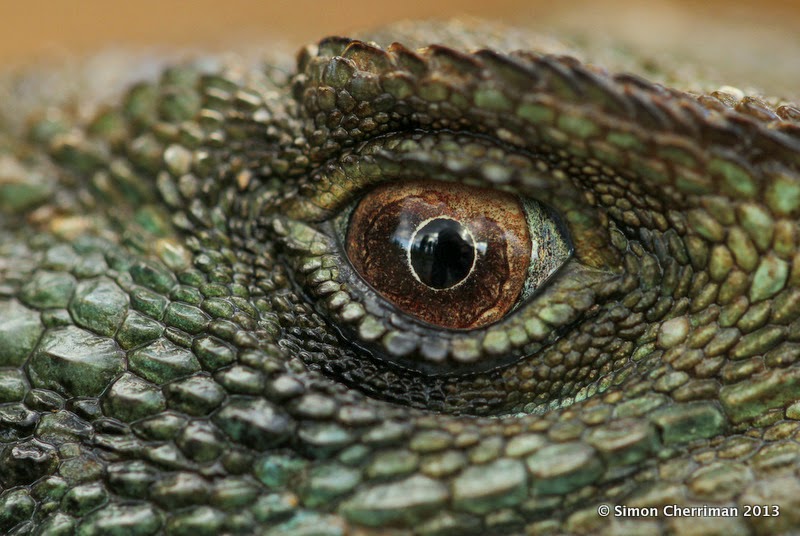
This great little wetland (a delightfully concreted urban drain in Canberra) is home to a surprising array of wildlife, so I found recently. The attempt at preventing erosion by concreting the banks and building large rock walls held in place with wire mesh framework (and I say 'attempt' because downstream of this photo the banks are totally washed away by storm-water flooding!) has actually been quite beneficial to one species in particular. Here it is...


No - this eye doesn't belong to a Tyrannosaurus rex!!... although its dinosaur-like appearance is a clear indicator of the ancient ancestors from which this creature evolved. It is in fact the eye of a Gippsland Water Dragon (Physignathus lesueurii howittii), one of the large, semi-aquatic reptiles found in eastern Australia. These native lizards are named 'dragons' because of their resemblance to the creatures of Chinese mythology. Here's a wider view of one:


You can see the 'dragon-like' features which include thick, leathery scales, a spiky 'mohawk' (which is actually a row of pointed scales running down the centre of the neck, referred to as a 'nuchal crest'), and long, powerful legs equipped with sharp claws which make these lizards adept climbers. It's hard to get any sense of scale from the above image, but they can grow to a metre long, and weigh up to 1kg!

Water dragons are excellent swimmers and while walking around the drain I often head a 'plop' then saw one motoring across the surface of the water. Water travel is made easy with a thick, paddle-shaped tale, which is dorsally compressed (a scientific term meaning 'squashed in from the sides') and makes up about two-thirds of the body length. Sometimes they dive straight under and can remain submerged on the river bed for over an hour! When emerging from their watery hiding place, the wire mesh walls on our Canberra drain give them excellent grip, and the rock is a perfect place to bask, especially when carpeted with blankets of golden sunlight during the late afternoon. Being 'solar-powered', all reptiles rely on an external source of heat to fuel their metabolism, so scanning rocks and logs while walking is a good way to tune into lizard spotting. This smaller female dragon (noticeably greener in colour than the male pictured above, and with less bold markings) was half way through shedding her skin, and allowed me to crawl quite close for a photo. There is something refreshing about seeing the old skin peel off and make way for the beautiful new scales underneath.


Ok... let's finish with a challenge. Spot the dragon! Here are four photographs taken along the creek banks at our Dragon Drain, each one with a dragon hiding. Can you spot them all!?
(Click on each image to make it larger).


Sunday, 3 November 2013

Creatures of the Dam

 
This beautiful water, decorated with water lilies and surrounded by dense reeds on some of the banks, makes up part of the picturesque scene below the verandah of the house where I'm spending a few days near a place called The Channon, in north-eastern NSW. Looking at the perfect reflections which shimmer on a flat surface which resembles a giant piece of glass, the dam gives the sense that nothing is moving. However, as I've found out over the last few days, there is always plenty of wildlife hiding away in such areas. Check out these amazing creatures!

These Hardheads, or White-eyed Ducks (Aythya australis) have landed on the dam for each afternoon. Initially I thought they were a pair, but looking more closely you can see they both have white eyes, making them males - females of this species have a brown iris.


Late one afternoon I was really lucky to see one of Australia's most iconic yet cryptic animals - a Platypus! European settlers first thought this amazing animal was a hoax because it was a mammal with a duck's beak that lived in the water. Platypus live in freshwater streams, diving beneath the surface and using special electro-sensors in their bill to detect creatures like crustaceans and small macro-invertebrates. They surface every so often and raft around on the water before diving, giving anyone who is looking a sneaky glimpse!


As the sun set a few loud noises started up at the pond's edge. Investigating with a head torch and listening carefully, I managed to find the culprits - two species of tree frog which were calling loudly to attract mates. The first one only reaches 3cm in length so was hard to spot among the thick reed stems, but eventually I snapped a photo. Meet the Eastern Dwarf Tree Frog (Litoria fallax):


The second species was much louder and also larger, making it easier to spot with a head torch. Another tree frog, as evident from the large discs on the end of his fingers which are very useful for climbing, sat on a large tree stump giving off his whirring song. This one turned out to be a Peron's Tree Frog (Litoria peronii), a common species of the south-east. You can just make out the yellow pattern between his fingers - this was even brighter along the linings of their legs.